Showing posts with label books. Show all posts

Monday, November 15, 2010

Halleluiah

A hundred and two degrees in the New York smog. 'Halleluiah' by Leonard Cohen playing on her dime-store record player, that song Howard liked to call 'a hymn deconstructing a hymn'. Long ago Kiki had submitted to this musical part of the memory. But it was surely not true -- 'Halleluiah' had been another time, years later. But it was hard to resist the poetry of the possibility, and so she had allowed 'Halleluiah' to fall into family myth. [...] When, on their twenty-fifth wedding anniversary, Jerome had played his parents an ethereal, far more beautiful version of 'Halleluiah' by a kid called Buckley, Kiki thought yes, that's right, our memories are getting more beautiful and less real every day.

Reading this in bed last night, I thought first about the time a friend of mine played me Jeff Buckley, the first time I heard him and, at first, didn't like him. Then, I thought what a pity it was that this comparison can't make the younger musician feel proud, since Buckley died almost ten years before On Beauty came out. So it can only make Leonard Cohen somewhat annoyed. But he's probably too zen for that.

Saturday, November 13, 2010

Looking for Things to Read that Are Not the Things I Have to Read

Yes, I have lots of reading in the months ahead, and lots of writing related to that reading. (I belong to the "Dorothy Parker school" of writing; well, to some extent -- I hate the writing part, but I'm also increasingly ambivalent about "having written." As you can imagine, I find it all a nightmare and I complain throughout the process, finding new kinds of pain every step of the way. It's an important part of my life and its, hm, meaning.)

Because I have a lot of reading to fear, I'm trying to build an imaginary buffer of non-required reading. I don't know how much of it I will actually read, but I find comfort in knowing about books that I could read without a pencil in hand. For me, this means mostly new books, from the last ten years or so. And, usually, books by women.

Now, the latter is not a requirement but rather a flexible rule that has emerged in the course of my reading life. It's not an ideological stance (I don't think), though it has probably partly grown out of my weariness with everybody reading mostly men most of the time. When you check out people's responses to yet another bookish facebook meme, you'll find that, statistically, that tends to be the case. And I do manage to worry some people with my reading preferences -- there are friends and acquaintances who imagine I'm pretending like it's the 1970s and sticking to a "niche." But, hey, if gender is so irrelevant and we're so post-feminist, why should my reading belong to a niche rather than be the result of perfectly random choices -- the very same ones that result in all male book lists, only with slightly different results.

... and I see I've drifted away from what I actually wanted to say.

During a google search for I can't recall what, I stumbled across this piece, by Rachel Cusk. I then looked up Cusk on The Guardian and now I want to find out more about her writing. Anyone?

And in the real world, I'm supposed to be revising an essay and beginning to read some of the many things in my area. Instead, I'm staring at the yet unread copy of Zadie Smith's On Beauty on the table in front of me(I must be the last person who hasn't read it).

Monday, October 18, 2010

The Fount of Boredom

I'm supposedly writing a paper. But I'm really staring at the computer screen and doing random paper-related things peppered with absolutely paper-unrelated things. Because I feel like this:


Not that I feel like reading this novel right now*; I feel as awkward as its style. Ble.

*It's Henry James's The Sacred Fount, which I must read at some point because it's supposed to be as terrible as this beginning. Pot calling the kettle black, eh...

Saturday, October 16, 2010

The One in Which I Argue with Henry James*

From Azarian: An Episode (1864), by Harriet Prescott Spofford:


If he massacred your dolls when you were children twice (because he found her new hiding place for her toys), it looks like there's no hope for him. Sadly, the protagonist, Ruth, doesn't give up on Azarian even after his grand speech on how he imagines their marriage:


Henry James hated the novel for its 'unrealistic plot', 'unconvincing characters', and abundance of descriptive passages. Focusing on giving Prescott advice (write like French male writers!), James didn't think that the excess in the descriptions could have an ironic quality, or that boredom experienced by the protagonist was quite poignant, not to mention that the two aspects of the novel related to a distinctly different experience than that of French (or American) men.

Azarian would be À rebours à rebours if not for the fact that it was written earlier than Huysmans's novel. Art is an important theme in the novel, but not the "art for art's sake" of the decadent dandy, but the art of women painters (such as Ruth) or women of theater (such as her friend Charmian), or the work of salon hostesses such the mysterious Mme Saratov; art that does not conceal its relationship to money and does not enshroud itself in a veneer of "isolated genius."

The successful artist Ruth believes she has to get married because 'that's just what women do.' As she explains to a well-meaning friend who's trying to warn her about Azarian: "I see what you mean, yet marriage is the natural condition of maturity. Even a bad and selfish man must therefore be a better one if he has a wife If it were question with me ... of marrying such a man as those you knew, I should feel when the dazzle of his days was off how dull and dreary would they wear away. I would bide my time, I would marry him, serve him cheer him, be his slave" (199).

She's tortured by these ideas, driven mad by them to the point when she doesn't realize she's financially independent (her paintings sell extremely well) and that she was much less lonely before Azarian appeared and chased away her friend and love, the actress Charmian.

Azarian is a novel about death of boredom and the delusion of passivity. It's also a novel about women's talent being reduced to craft and fancy rather than artistry and imagination. That's what Azarian does to Ruth and James to Prescott. James accuses her of writing puppets rather than people, but are these categories necessarily mutually exclusive?


*It's easy to argue with the dead--they don't tend to talk back.

Poverty Porn

Poverty porn is, among other things, a genre of Polish literature. It's a relative of the misery memoir, but if they should meet at family reunions, it would be clear they are not on speaking terms. Because the misery memoir is premised on at least the pretense of its author going through hell, while the author of poverty porn is always looking down on hell from the distance of several storeys, typing away gleefully, while her elbows rest on the cushion of her middle-class status and her higher education.

The poverty porn writer is the smartest person you will ever know: he can break down the walls of epistemological impossibility and inhabit the bodies of the underprivileged better than they can. He will tell you all about the filth, offer graphic and heartbreaking description of incest and sex for food, he will even paint a vivid picture of the thought process of an uneducated person, linguistic lapses and childlike logic included. Thanks to his insight you will see what it's like not to have the will to live, not to have absolutely anything to look forward to, and what it's like to eat rotten leftovers straight from the dumpster.

Most importantly, perhaps, the poverty porn writer will show you what it's like to get aroused by all this. Beatings, garbage, teeth and gum problems, blisters, abuse, family dysfunction--she will show you how it can give you a hard on. It's real life, baby. The life around us that we fail to notice but which, in its rawness, has an authenticity we can only hope to emulate.

The poverty porn author not only notices but drinks from this fount of truth as fast as he can type. There's ardor in this, but also a kind of coolness that comes from calling the shots: you all are spoiled and privileged brats, you readers, but the writer is the one who can reach past his privileges into the dumpster of lifeforce, becoming the blood brother of his characters without even pricking his finger.

He knows. She knows. And you too can know some of this if you're willing to spend 30 PLN for a grain of truth that won't -- and don't even try to delude yourself -- give you any comfort. There's no hope for the sad characters of these tales. They go on to reproduce amidst the debris and then they turn into the debris and all you and the writer can do is watch and nod your heads in appreciation of this inevitability.

* * *

That's how I see this genre's modus operandi. I find it difficult to point to a specific "originary work," but the inception of poverty porn is connected to the growing wealth gap in Poland. Perhaps I should say, to the growing visibility of the wealth gap, because, obviously, there has always been a wealth gap, though before 1989 that fact was being covered up quite well by communist ideology and by the absence of celebrity journalism.

The work that stands out to me as the high point (maybe it is the "originary work," I'm not sure) of poverty porn is Dorota Masłowska's debut novel, Wojna polsko-ruska pod flagą biało-czerwoną [Snow White and Russian Red] from 2002; though her column in Przekrój took the pornographic aspect to the next level. I can still recall one of her descriptions, which is in itself a condensation of what all the texts from the column were about. It's a description of Masłowska looking at an old homeless man digging in a dumpster, which takes the form of an ode to the homeless man--it's Masłowska's Petrarch pining away for the forlorn and unapproachable male and homeless Laura, who obviously only seeks some edible leftovers and maybe clothes. The description is quite openly erotic, and all of writing about poverty I have encountered after Wojna polsko-ruska shares that prurient fascination, even if it covers it up with moralizing about the duty of describing "the true Poland that goes unnoticed."

How does it go unnoticed if you all are gawking at it?

Yes, some of the poverty porn novels are pretty good. Masłowska has an ear for language, she is witty, and imaginative. Sylwia Chutnik's debut, Kieszonkowy atlas kobiet, exhibits a great sense of humor and a feminist sensibility (not to mention the author's love of Warsaw, which translates into a gripping portrait of the city). And yet--it's still poverty porn. And it is that because the vantage point of the author, regardless of assurances to the contrary, is high, high above their characters'. It's speculation about poverty, it's like trying on a coat in a second hand shop to feel it, smell it, and leave it there, walking out enriched with a whiff of a different person and of a different life.

However, in imagining a life without the perks of education and an (at least somewhat) well-to-do family, the writers are taking more away even from their subjects--the truth about their existence and about their thoughts. The writers have them pinned down like specimens in glass cases. You can't argue with me, I have whole internal monologues written down in your voice.

And nobody will argue, because how could they? Without the time, and often the ability to write books, and have those be publishable books, on top of everything. And to be able to find a publisher.

Putting all that aside--the position of the impoverished is not a position of authority, not a preferred speaking position, if it really is your lot, and not a literary mask.

So, we could ask, if "they" don't write their stories, what's the harm in someone else doing that? Well, it's not "their" stories then. It's looking down on "them," ascribing traits and thoughts to "them," and getting off on that.

* * *

There have been many similarly problematic cases in literary history: the as-told-to biographies of American Indians where biographers would intervene and have their subject oddly accuse herself of "savagery" against all logic, or The Confessions of Nat Turner, in which Thomas Gray would have you believe that Turner thought of himself as an insane monster.

Editing has its pitfalls too: Harriet Beecher Stowe wanted to take Harriet Jacobs' story and use it in her own novel, and Lydia Maria Child who did act as an editor for Jacobs, toned her story down, sentimentalized it, and gave it a preface that today we would find condescending.

But editing at least doesn't take the subject's voice away from her. And it makes the roles clear: you are the one who owns the story, and I am here to help you tell it.

My largest issue with the texts I accuse of making poverty pornographic is the authors' assumption of a position that is very distant from their actual perspective on the issues they describe and belongs to a weaker party, a party that lacks the intellectual capital to compete with them.

Of course, fiction is not bound to be autobiographical or faithful to any rules but those that it sets out for itself. But when the authors put forward arguments about society and social functions of literature, then it's clear that it's not just fiction and literariness that are at stake here.

If what you want to do is make a statement about society with your work, say who you are and where you're coming from. Say what it's like to look at and not share, what it's like not to be able to completely understand, while wanting to understand.

I'm waiting for works that instead of offering disability fantasies or fantasies about Polish-speaking Roma from Romania, speak about distance, desire, and anger of those who want to understand more. If you're really after important things that go unnoticed, you will have hit the jackpot with this, dear writer.

Wednesday, May 19, 2010

Loving the Terrible

First:


But then:


-- Maria Susanna Cummins, The Lamplighter (1854)
Compulsively readable even though one of my worst nightmares happens in Chapter III.

Saturday, April 24, 2010

Reading: Lonely, by Emily White


I have a copy with the blue cover (US edition vs. Canadian?). And while the image reminds me of the teenage I's favorite depressing book, The Bell Jar, the subtitle "A Memoir" feels less haunting than "Learning to Live with Solitude." White describes what for me are familiar experiences: a life in surreal tones that is, however, very real, but evades description as it evades relation. I don't think you can "learn" it because... what is there to learn? Renunciation? If so, why?

Why not "My Solitude and I"? If anything, White shows life from the vantage point of a solitary person, and the loneliness that makes this a different and difficult perspective is not "learnable," since it is hard to bear.

I haven't read the whole book yet, but here is one of the fragments that moved me--about the solitary "I" and language.

One of the things I'd done during lonely times in childhood was write out dictionary definitions and make myself memorize them. This isn't as entirely nerdy as it sounds. Words were something I cottoned to from an early age, and I loved flipping through the big dictionary my father had left behind. The problem was that, as a lonely adult, all the words I'd made myself learn seemed to take on lives of their own. Either they darted away just when I reached for them or they lunged back up at me with exhausting force. (39)

Saturday, March 13, 2010

Almanac of the Dead


The people had been free to go traveling north and south for a thousand years, traveling as they pleased, then suddenly white priests had announced smuggling as a mortal sin because smuggling was stealing from the government.
Zeta wondered if the priests who told the people smuggling was stealing had also told them how they were to feed themselves now that all the fertile land along the rivers had been stolen by white men. Where were the priest and his Catholic Church when the federal soldiers used Yaqui babies for target practice? Stealing from the "government"? What "government" was that? Mexico City? Zeta laughed out loud. Washington, D.C.? How could one steal if the government itself was the worst thief?
There was not, and never had been, a legal government by Europeans anywhere in the Americas. Not by any definition, not even by the Europeans' own definitions and laws. Because no legal government could be established on stolen land. (133)

* * * * *

Guzman's people had always hated her anyway. Because she was an Indian. "We know," Lecha said. "We know that. But what about the trees?"
Oh, yes, those trees! How terrible what they did with the trees. Because the cottonwood suckles like a baby. Suckles on the mother water running under the ground. A cottonwood will talk to the mother water and tell her what human beings are doing. But then these white men came and and they began digging up the cottonwoods and moving them here and there for a terrible purpose.
(117)

* * * * *

He thought about what the ancestors had called Europeans: their God had created them but soon was furious with them, throwing them out of their birthplace, driving them away. The ancestors had called Europeans "the orphan people" and had noted that as with orphans taken in by selfish or coldhearted clanspeople, few Europeans had remained whole. They failed to recognize the earth was their mother. Europeans were like their first parents, Adam and Eve, wandering aimlessly because the insane God who had sired them had abandoned them. (258)

Sunday, February 21, 2010

Illustrations and Ephemera for Uncle Tom's Cabin


I recently had the chance to look at several nineteenth-century illustrated editions of Uncle Tom's Cabin, responses to the novel, and children's books of verse and tales based on the novel. The amount of material generated already as the installments of Stowe's novel were appearing in The National Era is astounding. If you think that the gadget madness started with Lucas's Star Wars, you need a sentimental trip to the sentimental edge of the nineteenth century.

I post here a few highlights from a random web image search.


Images, from left, with links to original sites: [1] [2] [3] Eliza's escape across the frozen Ohio river; [4] Dinah holding little Eva; [5] [6] Eva and Topsy; [7] Eva with Tom

Saturday, January 9, 2010

The Accidental Feminist


Joanna Chmielewska, originally uploaded by erizone.

Joanna Chmielewska at a book signing in Moscow (Photo by erizone via Flickr)

I'm a fan of Chmielewska's comic crime novels. I say it with significant difficulty because I've been trying to hide this since high school. Her novels are rather simple and once you've recognized her patterns, they come across as straightforwardly formulaic (even for the genre). And yet.

I really like her earliest novels, the ones she wrote in the 60s and the 70s, though these novels present the communist militia as effective crime-solving agents of justice, somewhat naively explore the comic potential of the travel restrictions, citizen control, and turn into laughs the dearth of products and produce in a country that produced so much.

(For those who haven't experiences it, the spirit of the era is captured in the words of the grandmother from Juliusz Machulski's comedy about time travel, Ile waży koń trojański?: "If the USSR owned the Sahara, they would run out of sand." Everything was exported to the USSR, nothing was ever gotten in exchange but words of "a lasting friendship between the countries.")

Unlike the director Stanisław Bareja and the authors whose books were either chopped up or banned by the censors, Chmielewska didn't ridicule the People's Republic -- she eulogized it.

Is that my problem with Chmielewska? Actually, no. It is no secret that some people miss the regime or that their lives were in many respects better before 1989. In some -- significant -- respects it benefited women. A difficult economic situation was legally and widely recognized as an appropriate reason for a woman to get an abortion, if she wished to get one; it was deemed logical that a woman would want to work, that there should be kindergartens and school lunches. But of course there was also sexism and pay inequality.

And yet -- the measures that existed mattered immensely. That became obvious once they disappeared. Chmielewska's quirky thirty-year-olds wouldn't have been able to solve any crimes in the 1990s.

So they turned sixty and plunged into nostalgic fantasies. And the author declared that she absolutely wasn't a feminist. Rejecting the label is one thing, but she went further, offering piles of nonsense about "women's nature," delicate femininity, and the family.

I stopped reading her for several years not only because her books became dreadfully boring but mostly because I couldn't stand her searing hypocrisy.

Here is what I enjoyed about her writing (and am enjoying again with the fabulous radio adaptations of her early novels):

Chmielewska's protagonists are single mothers or unmarried women in their 30s and 40s -- independent, going where they're not allowed to go in order to solve mysteries or gamble (horse races and casinos recur). Her most frequent protagonist and alter ego, Joanna, is divorced with two sons, she spends more time hanging out in cafes with friends and new love interests than cooking soup for her kids. From one of the novels we learn that she had left her sons in Poland for a year to work in Copenhagen as an architect, explore nightlife, and gamble. For the money won at horse races she buys a car and snakeskin stilettos.

The CD edition of the radio play about the novel I've just briefly described includes an article about Chmielewska's "accidental feminism."

The article was written by her secretary whom Chmielewska fired shortly afterwards. Coincidence?

Poland is a country where public figures are almost never made to own up to their words and deeds (yes, Polański, among others; yet more strikingly, a former Prime Minister who wanted to outlaw divorce and then abandoned his family for a twenty-something-year-old bank employee).

I've never been employed by Chmielewska so I risk nothing in saying that when I was a teenager her novels gave me hope that I could indeed become who I wanted and not just somebody's wife and mother. I can't make her own up to her hypocrisy but I can point it out.

Note: The second photograph is Krystyna Sienkiewicz as Janka in Lekarstwo na miłość, the film adaptation of Chmielewska's debut novel, Klin (1964).

Wednesday, December 30, 2009

Reading for Repetitive Beginners

Repetitive beginners aren't those with just elementary reading skills. Not the ones who would always choose a film adaptation of a book over the book itself. It's the ones who have overeaten reading matter, which means that reading has eaten them and now they cannot help reading cereal boxes, descriptions of detergents, magazine ads, internet banter from facebook status updates to seedy gossip columns, emails (tons of emails), reviews, interviews. They've made reading the central element of their work and compulsory reading lists have eaten their attention. At home, all the novels have teeth.

...

I got a lovely email from an old friend. In high school we would give each other reading recommendations. I never kept track of what I was reading: allusions led to allusions, accidental choices always swept away designs. But my friend kept a reading journal and had a list of must-reads. He would put ticks by the titles in his journal. (I just had notebooks of quotations, which are now stowed away at my parents', so my feigned erudition plan fell through, we could say.)

The lovely email was like the letters we used to exchange in those dust-covered days of pleasure reading -- it was like a letter and chock-full of great reading recommendations.

Wonderful. But how do I explain that now when I have plenty of reading lists (mostly not devised by myself), I feel that I read almost nothing? Ever since I decided to study literature at university I have increasingly felt the teeth of books. Before that I would sometimes fall asleep with a book. Now I am always prodded by the pencil left between the pages.

In terms of recommendations, I feel like sending my friend this one link: to an article about Margaret Drabble's new book. I can really relate to Drabble's interest in jigsaw puzzles. I don't like them myself, but I know what it's like to desperately need a hobby other than reading.

I am currently knitting two scarves (I never thought I would knit anything, ever). Because of the scarves I haven't posted anything here in a longer while.

But I send my love to the accidental internet tourists and friends who might stop by.
Recommendations for me on how to respond to that letter and/or reading recommendations, please!

Sunday, December 6, 2009

Oryks i Derkacz

Czyżby świat przedstawiony w powieści Oryks i Derkacz* Margaret Atwood już chwytał nas za gardła?

Pogarda wobec nauk humanistycznych prowadzi do tego, że "specjaliści" nie rozumieją znaczenia i konsekwencji własnych działań. I nie zdają sobie z tego sprawy, niestety.

Ten list z Gazety Wyborczej niestety utwierdza mnie w przekonaniu, że wspólnym językiem dziedzin i krajów staje się nie tyle angielski, co pieniądz. (I zdaję sobie sprawę, jak naiwnie to brzmi, ale z drugiej strony nie uważam, że przyjęcie tego po prostu do wiadomości załatwia sprawę.) Nie będę pisać o tym, jak to wygląda na mojej uczelni, ale nie jest wesoło. Oryksa i Derkacza czytają studenci na seminarium mojego kolegi, a powinni też przeczytać tę książkę konsultanci, którzy tną nam budżet i likwidują wydziały humanistyczne.

W liście do Wyborczej czytamy:

Mój kolega M. wkrótce przestanie być studentem i wkroczy w świat krawatów i dużych pieniędzy. Może z czasem, jako uznanemu fachowcowi, ktoś zaproponuje mu stanowisko w administracji państwowej albo zleci jego firmie zrobienie ekspertyzy dla jakiegoś ministerstwa? Mam tylko nadzieję, że nie będzie to ministerstwo odpowiedzialne ani za kulturę, ani za szkolnictwo wyższe.

... i ciarki przechodzą.


*Yes, I do mean Oryx and Crake. I haven't read The Year of the Flood yet but I'm looking forward to it.

Thursday, December 3, 2009

The Dreary Lot of a Bookseller

Found on the internet: The Book Mine -- Stupid Quotes

A sample:

(man gazing around)
"You have a lot of books."
"Yes and they could all be yours!"
"What would I do with them?"
"Read them?"
"Why? I read one once."

Tuesday, October 13, 2009

Marlene


Forthcoming or already there: Marlene by Angelika Kuźniak. New Polish biography reveals Dietrich's Polish connections.

All linked texts are in Polish, since it's pretty unlikely that the book will be translated. Something to ponder.

[An early blog review]
[From the publisher]
[Radiowa Dwójka reading Marlene on air]

Friday, September 18, 2009

Hungry


I'm thinking of getting this book.

I was a hungry teen: I lost weight at 15 and went crazy. My days were about counting calories, eating half of the half I already was eating, and squeezing in exercise whenever I could. At 18 I suddenly got terribly sick. One evening I took an afternoon nap, feeling oddly weak after a meal and woke up in pain. I thought I was going to die from intestinal cramps -- one of the lousiest, least-romantic, bordering on funny, deaths that you can imagine. My mother called the ambulance, I remember passing out because of the pain in my stomach, and the doctor trying to make me talk, so I stay conscious. I got a shot, which relaxed the cramps and after a few hours of sleep I went to the doctor for what was the first of a long series of visits and exams.

The diagnosis: an ulcer. Sounds simple, I know a lot of people deal with ulcers in one, two years, but I haven't been able to. Although, perversely, the illness helped me get over the worst obsession by preventing me from dieting, I still haven't learned to handle work-related stress or body image fears. (Like now, when I've gained a few pounds and, rationally, I know it doesn't really make much of a difference but I do feel I should lose them. But I'm not actively pursuing this -- just watching my thoughts.)

I wish I could have come to wiser conclusions about eating with a different inspiration than an imminent risk of a hole in my stomach.

But here's what the hole taught me:

raw food and fruit only diets -- crap: your inundating your stomach with acids and providing your body with only a small group of the nutrients you need;

mono-diets -- see above;

"cleanses" -- crap in a lot of cases: I understand they can help you once in a blue moon, but only if you don't belong to the huge group of people who absolutely need to eat regularly for hundreds of reasons (the basic: eating regularly is the healthiest option); if you want to "cleanse yourself of toxins" quit coffee, tea, and alcohol, sauces, fast food, snacks, chocolate, maybe dairy for a few weeks;

exercise -- good BUT if you find you are scheduling your life around visits to the gym, you are bat-shit crazy and if you think you're cool because you jog around your block but then you never WALK anywhere, you're not too smart;

demonizing bread and potatoes -- starch isn't toxic, you need to have a healthy balance of the amounts you consume AND advocate good bread (which does happen to be white sometimes), without half the periodic table in it, keeping it the same for months;

"halp! carbs!" -- change it to "help! synthetic food!"

The food part is easier than making friends with the mirror. I've been practicing for years. I feel like it's getting better, but there are many times when it feels like day one.

It doesn't help to have this as your ethnic beauty ideal and success story (btw, her body's chosen weight was this).

Don't get me wrong, I'm not biased against very slender people -- IF it's their natural weight. If it's a result of a fierce battle with the body, I don't support it. That's why I'm very grateful to Crystal Renn for writing her book and for interviews such as this one.

[Amazon.com promo]
[Kate Harding on Crystal Renn at Salon.com]
["No Longer Hungry..." at 2Medusa.com]
["Crystal Renn... on Having Her Cake and Eating It" - The Guardian]

Sunday, September 13, 2009

The House of Mirth

"The heart of the wise is in the house of mourning; but the heart of fools is in the house of mirth."
(Ecclesiastes 7:4)

This is why I don't read the Bible.

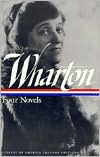
The quote comes from notes to Edith Wharton's The House of Mirth, which I've been meaning to read for years. I'm in the middle and loving it so far, although my heart is in the house of graduate student despondency (I'm reading it for an exam).

Unfortunately, I'm one of those people who get influenced by the book's cover when they read. So while there are all those editions with monumental female figures on the stairs or fainting due to excessive femininity, I am lucky to possess this Library of America edition (pictured right), where the "h" reaches somewhat too vigorously into Edith Wharton's nose. In this circumstance, Ms. Wharton's expression seems less tortured by New York society than by intrusive poligraphy, which is reassuring. You can cringe all eternity about society, but if it's not women and marriage, society finds other things to be awful about.

The cover with the triumphant "h" also makes the sense of creative struggle with the word more palpable.

I feel you, Edith Wharton, from far below your creative level. During my irregular visits to the house of blogging confusion, I get this sense of struggle in a less literal way (which my deviated septum greatly appreciates). I'm probably one of the last people to discover the much talked/blogged about style blog written by an eloquent 13-year-old. I hope she does better in combining blogging, doing her homework, and having friends than this English teacher.

I really hope she has friends rather than a book deal.

But back to Lily Bart.

Thursday, April 16, 2009

Add Zombies

I'm not sure I understand why.

I also don't understand why I am intrigued by the idea. But I am. Maybe it's the simplicity of the title, which doesn't purport that zombies are somehow implicated in the story but just adds them. Obviously, I can't answer the big question posed by NY Times -- I don't know what exactly zombies add to the plot. Exercise? A dash of female agency as Elizabeth Bennet gets to run around with a dagger rather than sit in a parlor with her mother and sisters?

Or not.

I found an excerpt and illustration (there are illustrations! the book is scoring points with me) here. Any thoughts?

Sunday, March 8, 2009

Reading Assignment

A few weeks ago I bought James Wright's The Branch Will Not Break on Amazon. I was very surprised by how student-friendly the price was and an anniversary edition to boot!

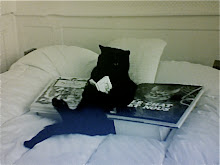
My surprise was even greater when the book arrived and I discovered that it makes a great prop for the tiny teddy bear and that there is no way I can read it without my reading glasses.

Now, I am an adult and should be better at handling such things. And yet I do feel slightly apprehensive about the reaction of the other critics and poets kids when I take out my little book tomorrow in class.

Sunday, February 22, 2009

Sunday Confessions

It's Sunday evening and after a week filled with 19th-century sentimental fiction, I feel whimsical.

The downside of studying literature is that though you do get to fill your life with reading interesting things, it's not necessarily that the assigned reading is what interests you at that particular moment...

So I started drawing up a list of what I'd really feel like reading now (but can't because I'm reading lots of other things). On top of the list is Stevie Smith. I only ever get to read her poems online, without the drawings, and read essays that mention the drawings but never reprint them. I need to change that. (And why did I ever give up drawing? At least I'd have another way to vent...) She's fun, brief, morbid, and didn't waste her time writing lofty manifestos. (Although I don't think planning and going about your suicide is a better way to spend your time.)

I'd also like to read Elaine Dundy's The Dud Avocado (since reading this post; yes, I know I didn't exactly run to get the book asap).

And Mary Jo Bang's last (i.e. most recent) book of poems. It took me shamefully long to get it.

This children's book, which I read at least three times as a child.

Since I already got in this oddly confessional mode (because I'm drafting a paper on the confessional poetry), I might as well say that I'm pushing away reading a batch of essays on New Criticism and its impact on contemporary literary criticism (snoring already?) by contemplating whether I should make myself another mug of tea with soymilk. Soymilk is fat and so New Criticism has better dietary effects.

(Snoring already?) Off, then, from the realm of unread to the realm of reading assignments...

PS: Tea in the US deserves a separate post.

Sunday, February 15, 2009

I Wish...


Mini Book Earrings, originally uploaded by MyHandboundBooks.

... I wasn't allergic to every possible kind of metal. I can't wear earrings. I got my ears pierced when I was 5 because I desperately wanted to wear earrings. After several painful infections I eventually realized I was not destined to have pretty things dangling from my earlobes.

But gosh I wish I could wear these...